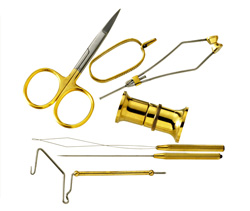

Get Started Fly Tying With This Equipment
|
Fly Tying Materials: Natural vs SyntheticWhile every fly tier has their own preference as to what is the better material (natural fibers or synthetic fibers), it is prudent to look at the special qualities each of these groups has to offer. Weighted FliesHow a fly moves and sinks in the water column is one of the most important factors in enticing a fish into striking. Some fish will move less than a few inches from their respected feeding zones, so getting flies down and keeping them at the appropriate depth is of the utmost importance.
11 Steps to Learn the Loop Finish Fly Tying SkillWhip finishing is a basic fly-tying skill that, once learned, you'll use on each and every fly pattern you tie. Learning to do it right is essential for creating durable flies that last longer than a few casts. 12 Steps to Tying Yarn Egg FliesThere's no disputing it — yarn egg flies are some of the most inexpensive and easiest fly fishing flies to ever come out of a vice. But, just because these flies require little effort to tie doesn't mean that they are not worth your time. Yarn eggs are an extremely productive fly for catching just about any type of trout or salmon that swims. Product Review: Carson MagniFly Lighted MagnifierThe frustrating part about fly fishing and fly tying is that as you gain more experience and skill in both, you lose a little in physical abilities. You can't wade as much as you used to; your casting stroke might not be as crisp as it once was, but mostly it's about eyesight.
Tying the Black Nose DaceThe Black Nose Dace is one of those special fly patterns that fly fisherman have favored for years on end. This streamer pattern was created by Art Flick in the early 1950s and works when nothing else will. Many large trout across the country get caught by this sultry streamer as it is swung near their feeding zone. Aside from its immediate attraction to fish, the Black Nose dace is also great searching pattern as anglers fishing the swing can cover large amounts of productive water over the course of a day.
Tying the Beadhead Prince NymphThe Beadhead Prince is a classic nymph pattern that will continue to be effective on streams and rivers for years to come. Created by Doug Prince, this special fly incorporates many flashy materials that fish just can't resist. The peacock herl used in the fly's body construction shimmers brightly when in the water, while the split tail and wing give the impression of a stonefly or mayfly nymph that has come free from the bottom. Don't Crowd the EyeMany years ago, my buddy and I were fishing a local brook trout river when, without much warning, fish started rising all around us. Suddenly, caddis flies were everywhere, bouncing over the water like little puppets held aloft by microscopic strings.
|