


One of the great boons to bowhunting is the growing number of women joining its ranks. Archery manufacturers have been quick to respond, producing more bows and archery accessories expressly with women in mind. Before taking advantage of this, however, the new female archer needs to make a few choices.
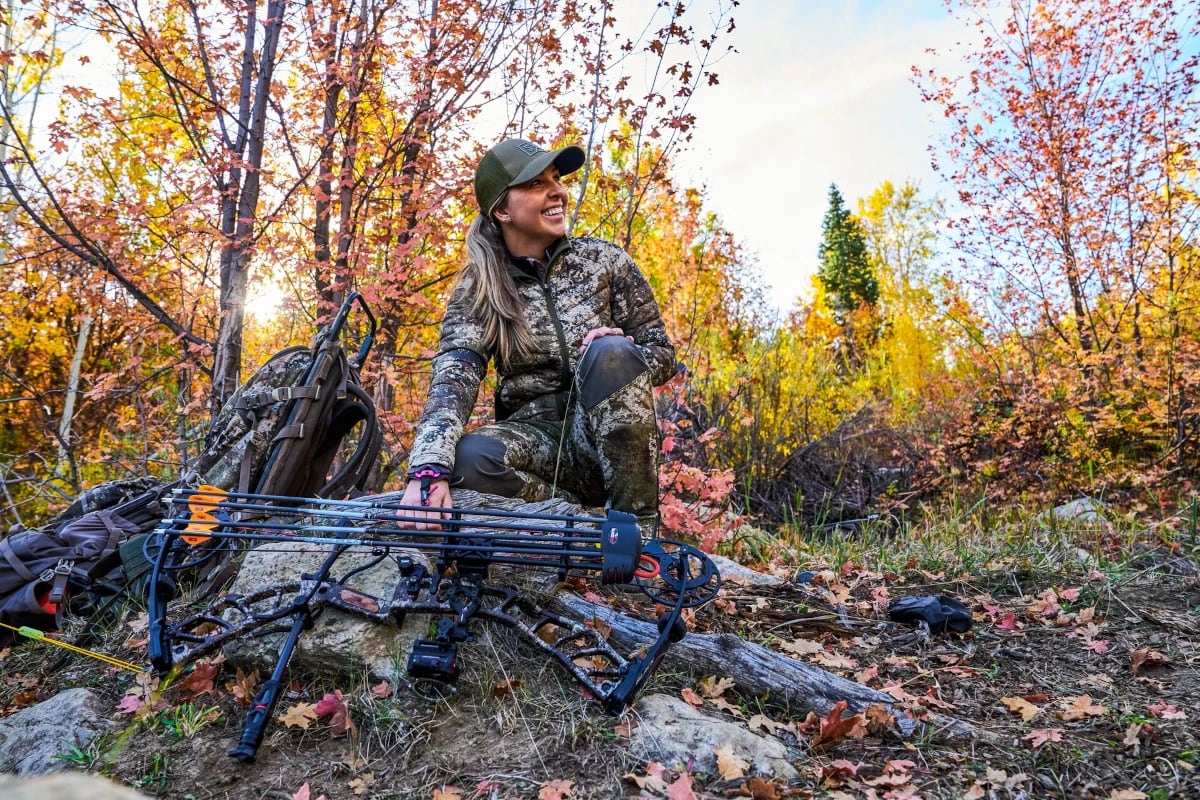
First Question: Do You Want a Traditional or Modern Bow?
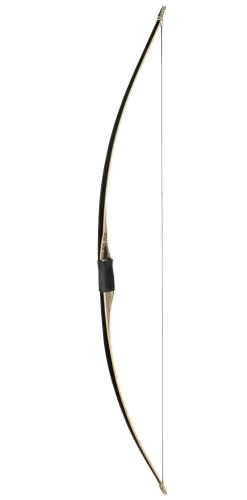
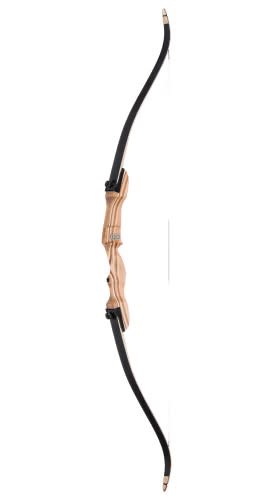
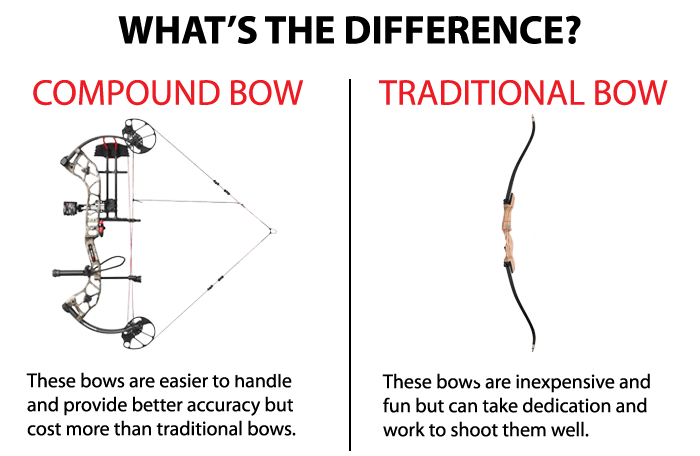
Those classic longbows and recurve bows seen in stores and catalogues are referred to as traditional bows. Compound bows, those shorter bows with wheels or cams at each tip, are their modern counterpart.
Tip: The Fred Bear® Montana Longbow is a smooth, fast-shooting traditional bow designed for reliability and performance. Measuring 64 inches in length, it features limbs faced and backed with black fiberglass overlays and reinforced tips for consistent strength and durability. The bow is crowned and cut to center for improved accuracy, and it includes a comfortable soft leather grip along with a powerful FastFlight string. This longbow is a great option for archers seeking a classic design with modern performance.
Before Purchasing a Bow, You Need to Decide Which Appeals to You
Compound bows generally come with bow sights. Their cams or wheels help make their draw weight (the amount of weight the archer needs to exert to draw the bow) easier to handle. That's because after the wheels or cams turn over during the initial phase of the draw, a let-off effect takes effect.
Many compound bows have up to 80 percent let-off. This means that the a bow with 40-pound draw weight and 80 percent let-off, only requires the archer to hold 20 percent of the weight, or 8 pounds (.2 x 40), at full draw.
This makes it easier to hold the bow steady and at full draw for longer, which ultimately translates into better control and accuracy.
Compounds also have a flatter arrow trajectory because they fling arrows at almost double the speed of most recurves or longbows of equal draw weight. This means correct range estimation is less critical at shorter hunting ranges.
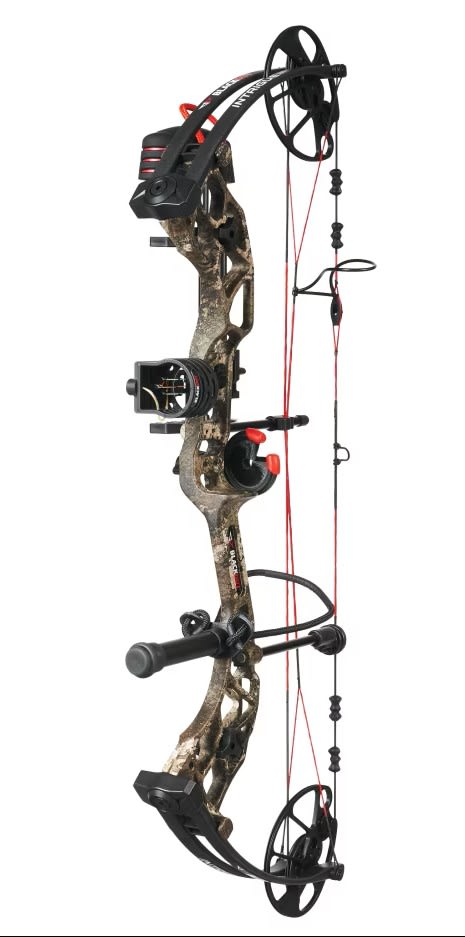
Here are a few recommended compound bows that work well for women:
Original Genesis Compound Bow Kits: The Genesis, is the bow that fits everyone and that automatically covers all draw lengths.I t's the perfect introduction to the sport of archery for young and old alike. The Genesis is incredibly accurate, quiet shooting, produces very little recoil and is just plain fun to shoot. It is available as part of a complete archery kit that includes a belt tube quiver, an adjustable arm guard, and 5 aluminum arrows. The kit also provides an easy-to-understand tutorial on how to safely use the Genesis bow and accessories
BlackOut® Intrigue X4 Compound Bow Package: BlackOut delivers a high performance, grow-with-you option with the Intrigue X4 Compound Bow Package. Built for developing bowhunters, this compact bow measures just 30 inches axle to axle, making it easy to handle in a stand or blind. It offers a smooth draw cycle with 80% let-off and a solid back wall, giving shooters both comfort and control.
Do not mistake it for a basic beginner bow. The Intrigue X4 is a capable hunting setup that sends arrows flying at speeds up to 315 fps. With a wide adjustment range, it grows with the archer, offering draw lengths from 16 to 30 inches and draw weights from 20 to 70 pounds. A 6.25 inch brace height adds to its forgiving performance.
This ready-to-hunt package includes a BlackOut 3-pin sight, Biscuit arrow rest, quiver, stabilizer with sling, TruPeep, and D-loop, giving archers everything they need to get started and advance with confidence.
Be sure to check out these articles: Beginner's Guide to Compound Bows, Purchased Your First Compound Bow? Now Get These Accessories
Traditional bows have their charms too. They are much lighter in hand and less costly at entry levels. Not much can go wrong with them. Generally speaking, recurve bows are the easiest traditional bows to shoot and put out faster arrow speeds. Both longbows and recurves are fun to shoot and possess a certain romance that their proponents truly enjoy.
But, while a compound bow user can become competent relatively quickly, it takes dedication and work to learn how to shoot a traditional bow well.
As a rule, traditional bows do not have sights, nor do they have mechanical advantages — if you are pulling a 40-pound traditional bow, that's the weight you are holding throughout the draw. This makes it harder to draw a traditional bow and because of the weight a different, more fluid shooting style is used.
Their slower arrow speeds also produce arching trajectories. So while 30 yard accuracy is no real issue for the average compound bow shooter, it presents a challenge for the person using the longbow or recurve.
Let's Talk About a Bow's Draw Weight
For recreational archery: A draw weight between 25 and 35 pounds is a good place to start for most adult women. Young teens and pre-teen girls should start with even lighter draw weights. In either case, once the fundamentals are ingrained and shooting muscles are built, the archer can gradually step up to heavier draw weights, which provide faster arrow speeds, flatter trajectories and more penetration.
If bowhunting is the goal: Check hunting regulations to determine the minimum draw weight required for the animals you plan on pursuing. Most jurisdictions require a 40-pound draw weight at 28 inches of draw for deer and 50 pounds for bear and moose.
Fortunately, many modern compound bows have a wide range of weight adjustment so that you can start shooting light poundage and work your way up to hunting weights. With traditional bows, however, you're stuck with the draw weight you bought, unless that model allows for interchangeable limbs.
Whether for hunting or target shooting, before buying a bow, try drawing it to the corner of your mouth. If you can hold it there comfortably for a few seconds, it's probably a weight you could handle. Otherwise go lighter.
Tip: Pulling too heavy a bow is a mistake that affects accuracy and causes muscle fatigue.
Finding a Bow That Fits Right
Bows designed expressly for women or youth are essentially scaled-down versions of men's bows, made to suit the shorter average draw length of women, youth and smaller-framed men.
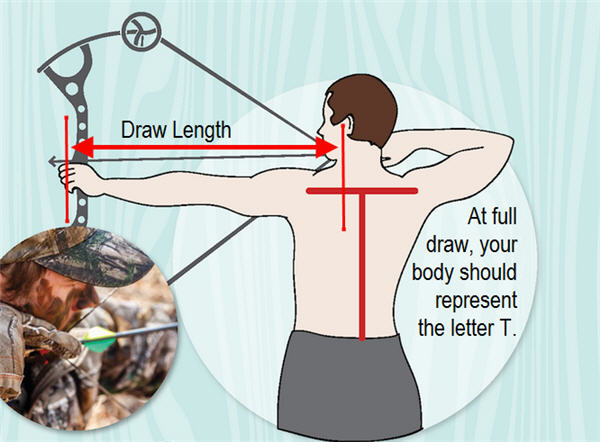
furthest edge away from the archer) to the point where you
anchor the string (called a nock point).
Draw length is the measurement from the back of the bow (the furthest edge away from the archer) to the point where you anchor the string (called a nock point).
There are many ways of predicting draw length but the best method is get it measured at a reputable bow shop before buying.
Tip: Find a store near you: Bass Pro Shops and Cabela's have experts on staff at their retail stores to help you find a bow that fits right.
Generally, women of average height have shorter draw lengths than men of average height. Not every compound bow is suited to shorter draw lengths so it's important to purchase a bow that fits the female frame.
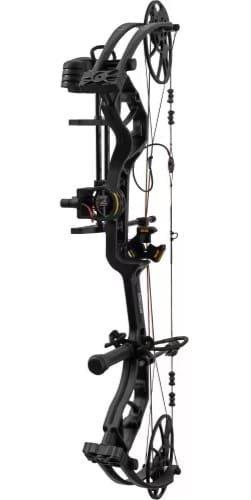
Also, make sure the bow's grip is a comfortable fit for your hand. That connection point is the base that your shot is built upon.
Younger archery shooters, who are still growing, and want to buy a compound bow should buy one like the Bear Legit Maxx RTH Compound Bow Package that has a wide range of draw length adjustment so the bow can grow with them.
With traditional bows, draw length is not as critical since you can simply pull it back further. However, that longer draw will also increase poundage.
The Compound Bow's Brace Height, Bow Length Considerations
Two other considerations, both for traditional and compound bows, are brace height and overall bow length.
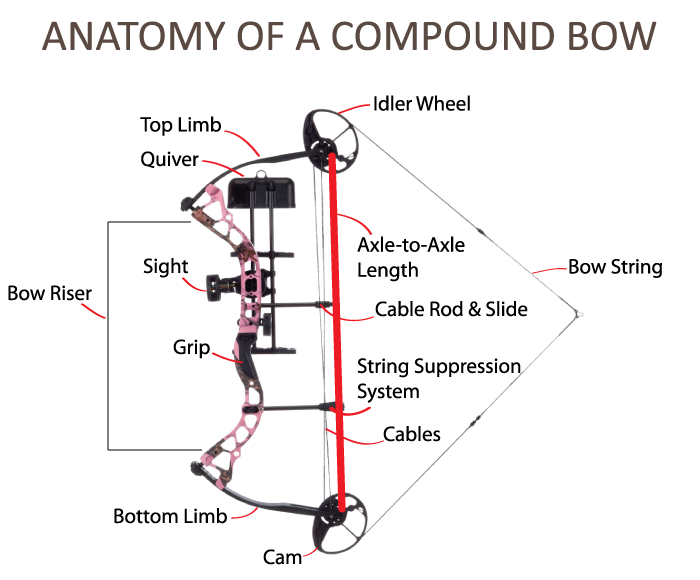
A bows brace height: This is the measurement from the nocking point to the belly of the bow (the inside edge). All things being equal, a bow with a higher brace height is more forgiving of mistakes in shooting form and less temperamental. This is a characteristic a new shooter should look for.
Similarly, shorter bows from tip to tip or axle to axle, tend to be harder for the newcomer to shoot accurately, though they are handier in tree stands and ground blinds.
- 96980 views