


How to Choose Duck Hunting Shells: A Guide for New and Intermediate Hunters
Duck season is closing in fast. Are your decoys ready, your waders patched, and your shotgun and shells dialed? When birds finally cup up and commit, your shotshell better be up to the task – it is arguably the most vital piece of gear. Since the late 1980s, waterfowl hunters have been required to use non-toxic shot, meaning the lead shot used for years was now outlawed. This shifted the industry from lead to steel, sparking decades of ammo innovation and massive conservation efforts designed to preserve the health of our flyways for future generations. Today’s duck loads come in a range of materials, including steel, bismuth, tungsten, and blends of two metals. Even though there are many options, they are all engineered to do one thing: hit birds hard and clean. If you’re new to the waterfowling world or just looking to improve your effectiveness, this guide breaks down everything you need to know before deciding what to chamber when the ducks start committing.
Types of Shot: Steel, Bismuth, Tungsten, and Blends
Before you start stacking shells in your blind bag, it’s a must to understand the types of metals used to make shot pellets and how each will perform.
Steel Shot:
Steel is the most common and affordable option for hunters. Steel is hard and can be plated with other metals, like zinc. This material can help the shot flow through the choke and reduce the likelihood of corrosion. The thing with steel is that it is the least dense shot material. This means it loses energy quickly. So, it is going to be harder to take those birds out past traditional ranges cleanly due to the lack of energy. However, when it’s paired with the right choke and shot size, it’s deadly. Steel takes down birds.
Bismuth Shot:
A step up in density and performance. Bismuth pellets retain more energy over the range, resulting in fuller patterns at range and making you better suited for longer shots. This means you can reduce your shot size for a denser pattern without losing energy.
Tungsten or Tungsten Blends:
The top-tier choice. Tungsten is denser than lead, bismuth, and steel. This means they retain energy further than all other materials and hit hard on impact. It’s the go-to for long shots, big ducks, or open-water hunts. The same thing applies to tungsten as to bismuth - you can reduce your shot size for a denser pattern without losing power. To put this into perspective, a tungsten #4 hits birds like a steel #2. The only downside is cost. This is where blends come in. Blends are a combination of tungsten and another material, like steel. They are priced lower than pure tungsten but perform similarly. However, if you’re serious about performance, tungsten is worth it.
Quick Breakdown:
| Shot Material | Common Shot Sizes | Effective Range | Best For |
|---|---|---|---|
| Steel | #4 to BB | Close to mid-range | General duck hunting, budget-friendly options |
| Bismuth | #5 to #2 | Mid to longer range | Fuller patterns, improved energy retention |
| Tungsten | #6 to #2 | Long-range | Big ducks, open water, maximum penetration |
| Duplex Loads | Mixed shot sizes | Versatile across ranges | Marsh hunts and unpredictable shot distances |
Choosing the Right Gauge and Shell Length
Your gauge and shell length impact recoil, versatility, and pattern density. The key is finding what you shoot comfortably and what patterns best from your shotgun.
12 Gauge:
The most popular and versatile gauge for waterfowl – the iconic 12 gauge. This gauge offers the widest selection of loads and can handle any migratory bird. Shell lengths range from 2-3/4” to 3-1/2”, with payloads from 1 oz to 1-3/4 oz and velocities up to 1700 FPS. If you could only pick one gauge, you should consider the 12-gauge.
20 Gauge:
Trusted by die-hard waterfowlers across the nation, the 20-gauge is not to be taken lightly. This gauge is lightweight and easy to maneuver, perfect for flooded timber or hunters making the trek into their public honey hole. With less recoil and solid performance in steel, bismuth, or tungsten, it’s highly effective with the proper load selection and ideal for close-to-midrange shots.
16 Gauge:
A good in-between option. It offers a balance of the 12’s power and the 20’s handling. While 16-gauge ammo options are more limited, Remington offers dependable 16-gauge waterfowl loads in our Nitro Steel line, so you can use your sweet 16-gauge.
Gauge & Shell Length Summary Table
| Gauge | Shell Length Range | Recoil Level | Best For |
|---|---|---|---|
| 12 Gauge | 2-3/4” to 3-1/2” | Moderate to heavy | Most waterfowl hunts, widest load selection |
| 20 Gauge | 2-3/4” to 3” | Light to moderate | Flooded timber, lightweight setups, close–midrange shots |
| 16 Gauge | 2-3/4” | Moderate | Balanced handling for hunters who prefer the 16-gauge platform |
Picking the Right Shot Size and Payload
Shot size can be confusing, but the rule is simple: the smaller the number, the larger the pellet. Larger pellets hold energy better at range, while smaller ones give you denser patterns since more can fit in the shell.
General Guide (12-Gauge Steel):
- Teal & Wood Ducks: #4 shot, 1-1/4oz payload – denser patterns with a smaller shot size. Great for close, fast-moving targets – just like these ducks.
- Mallards & Mid-Sized Ducks: #3 or #2 shot, 1-1/4 to 1-3/8 oz payload. This is the sweet spot for most hunts.
- Late-Season or Big Ducks: #2 to BB, 1-1/2 oz payload – excellent penetration for fully feathered birds at range – you’ll be suited in case a goose comes in too!
A good rule of thumb: bigger birds = bigger shot size or payload. Pattern your gun before the season to confirm what shoots best too.
How Your Hunting Environment Impacts Ammo Choice

Your hunting spot also plays a significant role in your decision for your shell. The average shot distance varies for every hunt!
Flooded Timber:
When you’re tucked away in the timber, expect closer shots and a smaller window for the birds to funnel into. Opt for smaller shot sizes and open chokes to keep patterns wide. Missing at close range is easy with a tight choke.
Open Water or Fields:
Expect longer shots and potentially windier conditions. Go with heavier shot sizes, denser materials like tungsten, or higher velocity loads. Remember, you want your shot pellet to retain that energy to hit effectively at longer ranges.
Marshes:
A mix of both worlds. Pattern different loads to find what performs best for your range of shots. An excellent choice for the marsh is a duplex load. Duplex loads are loaded with two shot sizes - a large and a smaller one. These keep you ready for anything.
Don’t Forget the Weather: Wind and Moisture
Bad weather often brings the best hunting - but it also challenges your gear and your will to get out of bed and go hunt! Another rule of thumb: always get up and go hunt.
Wind:
Strong winds cause pellet drift. Denser materials like tungsten or larger shot sizes cut through gusts better and are less affected by the gusts since they are denser and heavier.
Moisture:
Waterfowling is wet, plain and simple. Select Remington waterfowl shells feature waterproofing at the primer and crimp, but keeping your ammo dry in a sealed pouch or bag will protect your investment and ensure performance regardless.
Best Starter Loads for New Duck Hunters
If you’re new to duck hunting, keep it simple: a 12-gauge, 3” steel load with #2 shot will cover nearly every scenario. It’s affordable, easy to find, and delivers reliable patterns to help build your confidence. As you gain experience, experiment with bismuth or tungsten to match your preferred ranges and hunting styles. It all comes with experience!
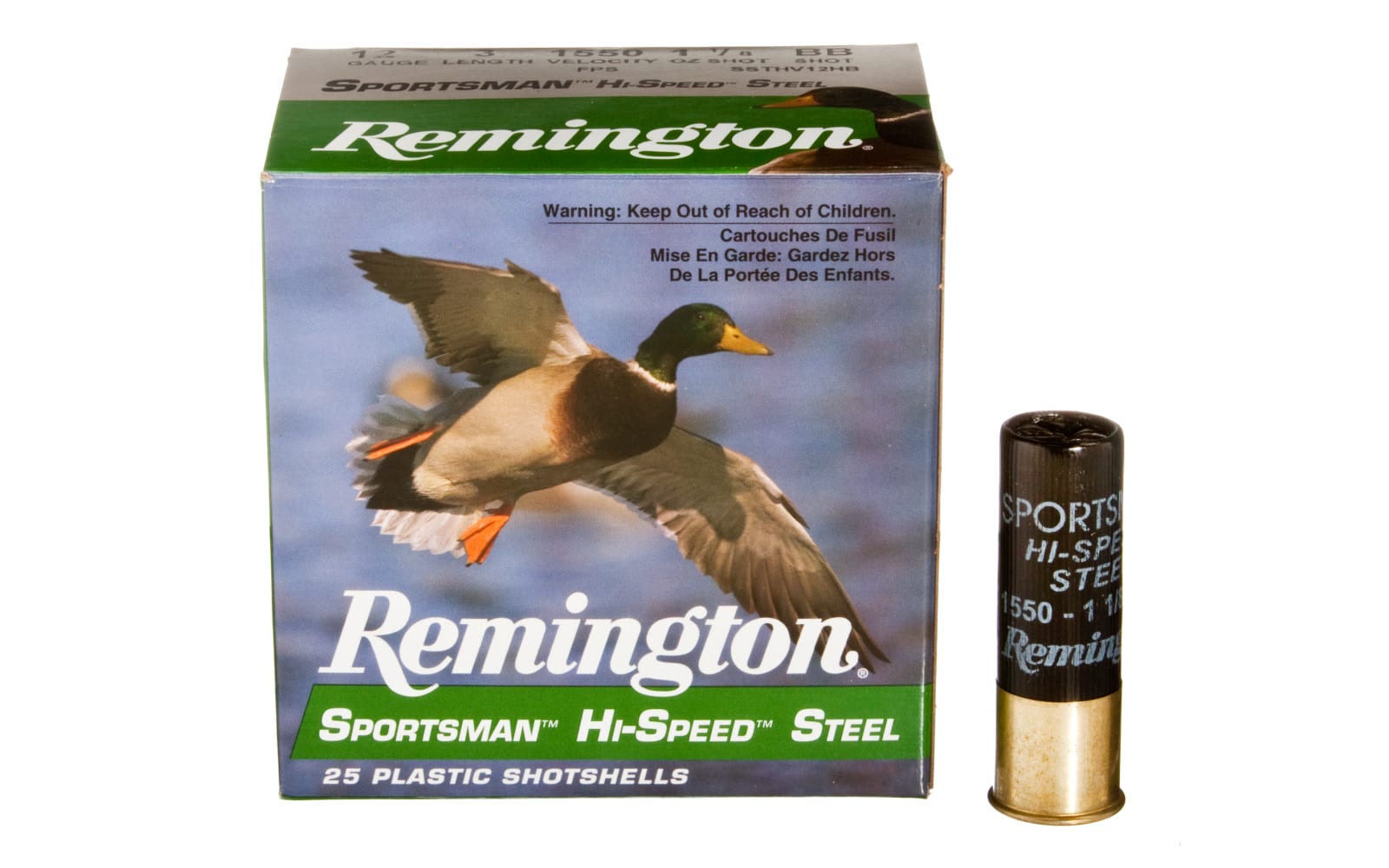
Remington Sportsman Hi-Speed Steel Shotshells
- High quality steel shot
- Sportsman® Hi-Speed Steel's sealed primer
- Consistent muzzle velocities
- High-speed steel load
Why Remington Waterfowl Ammo Earns Its Reputation
Since 1816, Remington has been crafting ammunition trusted by generations of American hunters. Whether you’re shooting Duck Club Steel, Nitro Steel Duplex, or exploring our expanding line of high-performance waterfowl shells, every round carries our legacy. From flooded timber of the south to the open fields of the North, Remington’s waterfowl ammo is engineered to deliver knockdown power, season after season.
- 14 views